Feelings picture walk
3–4 yearsFamily ConnectionMaterials: Family photos or photo album
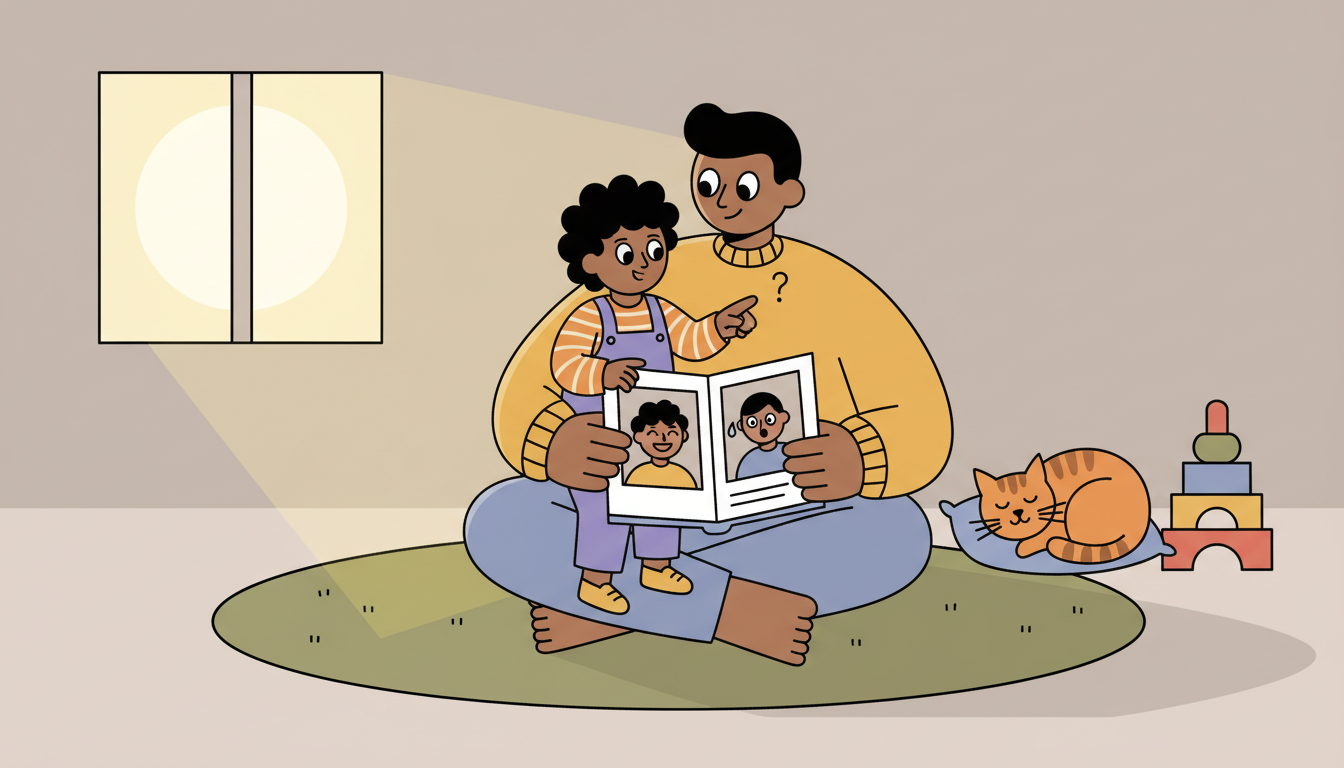
During your activity time, look at family photos together and talk about how people felt when each picture was taken. Ask your child to point out happy faces, sad faces, or surprised faces. Take turns guessing what made each person feel that way. You can say things like, 'Look at grandma's smile. How do you think she felt that day? What made her so happy?' This simple practice helps your child learn to read emotions in others.
Part of the Imprint developmental journey — personalized to your child.
How to Do This Activity
During your activity time, look at family photos together and talk about how people felt when each picture was taken. Ask your child to point out happy faces, sad faces, or surprised faces. Take turns guessing what made each person feel that way. You can say things like, 'Look at grandma's smile. How do you think she felt that day? What made her so happy?' This simple practice helps your child learn to read emotions in others.
Why It Works
Recognizing and responding sensitively to others' emotions is a key childhood behavior that predicts stronger adult empathy and relationship quality (Eisenberg et al., 2015). At 36-48 months, children develop theory of mind, which allows them to understand that others have different thoughts and feelings. Looking at photos provides a safe, concrete way to practice identifying emotions in faces and body language. This skill forms the foundation for empathetic responses later.
Tips for Parents
Start with obvious emotions like big smiles or tears before moving to subtle expressions.
If your child struggles, give them two choices like 'Does she look happy or sad?'
Share your own feelings from the photos to model emotional awareness.
Materials Needed
Family photos or photo album
Learning Methods
Narrative and Literacy-Rich ExperiencesCollaborative and Cooperative PlayInquiry-Based Learning

Loved this activity? Let us do the planning for you.
Imprint personalizes every activity to your child — their interests, their stage, the traits they're building — so playtime is more fun and every moment counts.
Science-backed. Private by design. No spam.