Feelings during playtime
2–3 yearsFamily ConnectionMaterials: Whatever toys you are already playing with
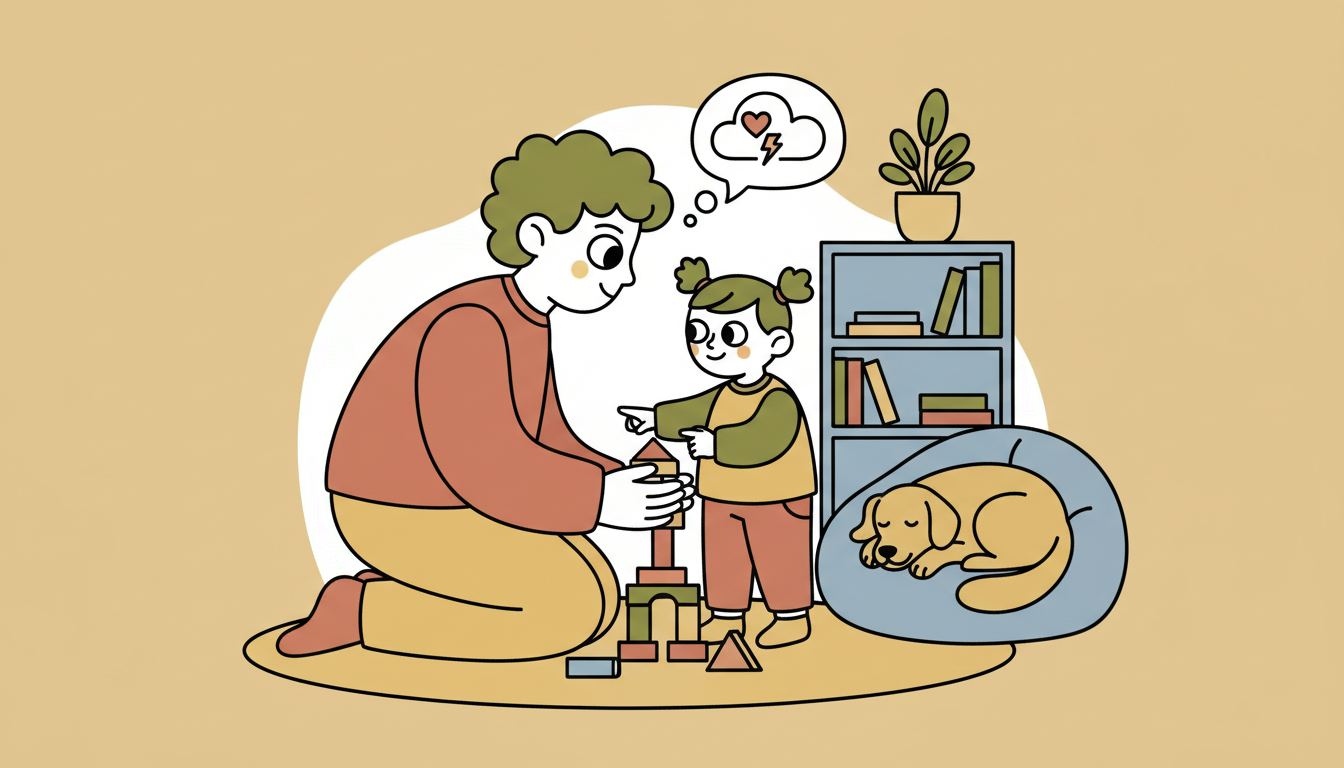
As you play together, narrate the feelings you observe. When your child laughs, say 'You are so happy playing with the blocks.' If they get frustrated, say 'You feel frustrated when the tower falls down. That is hard.' Naming feelings in the moment helps your child connect emotions to experiences.
Part of the Imprint developmental journey — personalized to your child.
How to Do This Activity
As you play together, narrate the feelings you observe. When your child laughs, say 'You are so happy playing with the blocks.' If they get frustrated, say 'You feel frustrated when the tower falls down. That is hard.' Naming feelings in the moment helps your child connect emotions to experiences.
Why It Works
Validating children's empathetic and emotional responses in real time builds emotional intelligence. When parents show empathy to their child while teaching about emotions, children develop the safe foundation needed to recognize emotions in themselves and others (Bhansali, B., 2023). Children with empathetic parents show significantly higher social competence (Liu, S., Wang, L., Zhang, L., & Tian, L., 2020).
Tips for Parents
Notice and name both positive and challenging emotions. All feelings are valid.
Use simple, clear words. Repeat the same emotion words across different situations so your child learns the patterns.
Materials Needed
Whatever toys you are already playing with
Learning Methods
Symbolic and Pretend PlaySongs, Stories, and RhymesSocial Learning Through Peers

Loved this activity? Let us do the planning for you.
Imprint personalizes every activity to your child — their interests, their stage, the traits they're building — so playtime is more fun and every moment counts.
Science-backed. Private by design. No spam.