Feeling faces pretend play
2–3 yearsFamily ConnectionMaterials: Stuffed animals or dolls
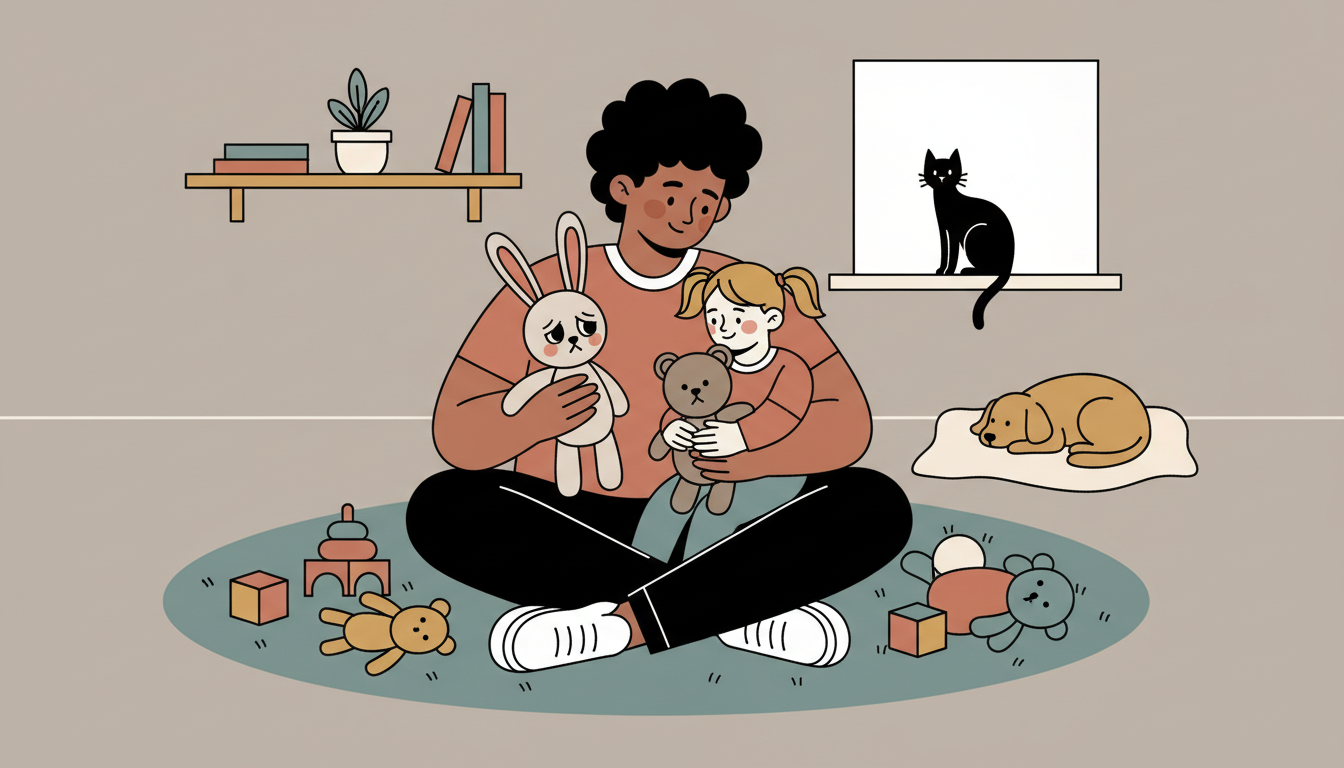
Use stuffed animals or dolls to act out different feelings during play. Make one toy sad and have it go to another toy for a hug. Say "Bunny feels sad. Bunny goes to mama for a cuddle." Then invite your child to help the sad toy feel better. This teaches that coming to someone you trust when you feel bad is a healthy way to cope.
Part of the Imprint developmental journey — personalized to your child.
How to Do This Activity
Use stuffed animals or dolls to act out different feelings during play. Make one toy sad and have it go to another toy for a hug. Say "Bunny feels sad. Bunny goes to mama for a cuddle." Then invite your child to help the sad toy feel better. This teaches that coming to someone you trust when you feel bad is a healthy way to cope.
Why It Works
Pretend play helps children understand emotions and relationships in a safe context. Secure attachments help children learn to empathize, develop relationships, and cope with stress (Canadian Psychological Association, 2024). Through symbolic play, your child practices emotional expression and learns that seeking comfort from trusted adults is a positive coping strategy, which supports their developing attachment security.
Tips for Parents
Name the emotions simply as you play. Use words like happy, sad, scared, or frustrated.
Show how the parent toy responds with warmth and comfort. This models the secure base your child needs.
Follow your child's lead. If they want to make all the toys happy, that's fine. The key is showing comfort works.
Materials Needed
Stuffed animals or dolls
Learning Methods
Symbolic and Pretend PlaySongs, Stories, and RhymesInteractive Play-Based Learning

Loved this activity? Let us do the planning for you.
Imprint personalizes every activity to your child — their interests, their stage, the traits they're building — so playtime is more fun and every moment counts.
Science-backed. Private by design. No spam.