Emotion story time
2–3 yearsEmotional WellbeingMaterials: Picture books
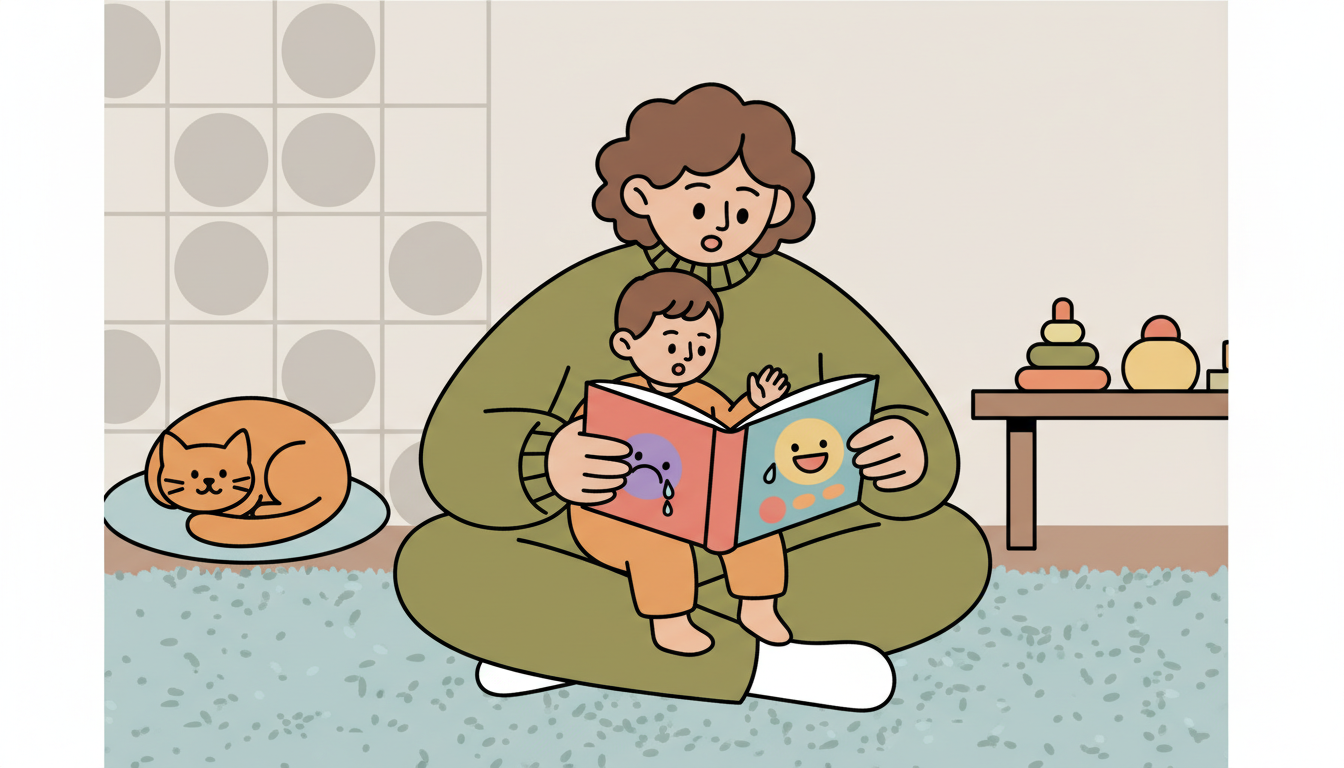
Read a picture book together and pause to talk about how characters might be feeling. Point to facial expressions and ask simple questions like, 'Is he happy or sad?' Name the emotions you see.
Part of the Imprint developmental journey — personalized to your child.
How to Do This Activity
Read a picture book together and pause to talk about how characters might be feeling. Point to facial expressions and ask simple questions like, 'Is he happy or sad?' Name the emotions you see.
This turns regular reading time into emotional learning. Stories provide a safe way to explore different feelings and build empathy.
Why It Works
The language explosion at 24-36 months makes this the optimal time for emotional vocabulary development. Early emotional coaching through stories significantly improves children's emotional intelligence (Goleman, 1995). Children with higher emotional intelligence experience better relationship satisfaction and mental health in adulthood (Bar-On, 2006). Stories help children recognize emotions in others, building the empathy component of EQ.
Tips for Parents
Use simple feeling words at first like happy, sad, mad, and scared. You can add more complex emotions as your child grows.
Connect the story to your child's experiences. Try saying, 'Remember when you felt sad like that?'
Materials Needed
Picture books
Learning Methods
Symbolic and Pretend PlaySongs, Stories, and RhymesSocial Learning Through Peers

Loved this activity? Let us do the planning for you.
Imprint personalizes every activity to your child — their interests, their stage, the traits they're building — so playtime is more fun and every moment counts.
Science-backed. Private by design. No spam.