Comfort your teddy
1–2 yearsFamily ConnectionMaterials: Stuffed animal or doll
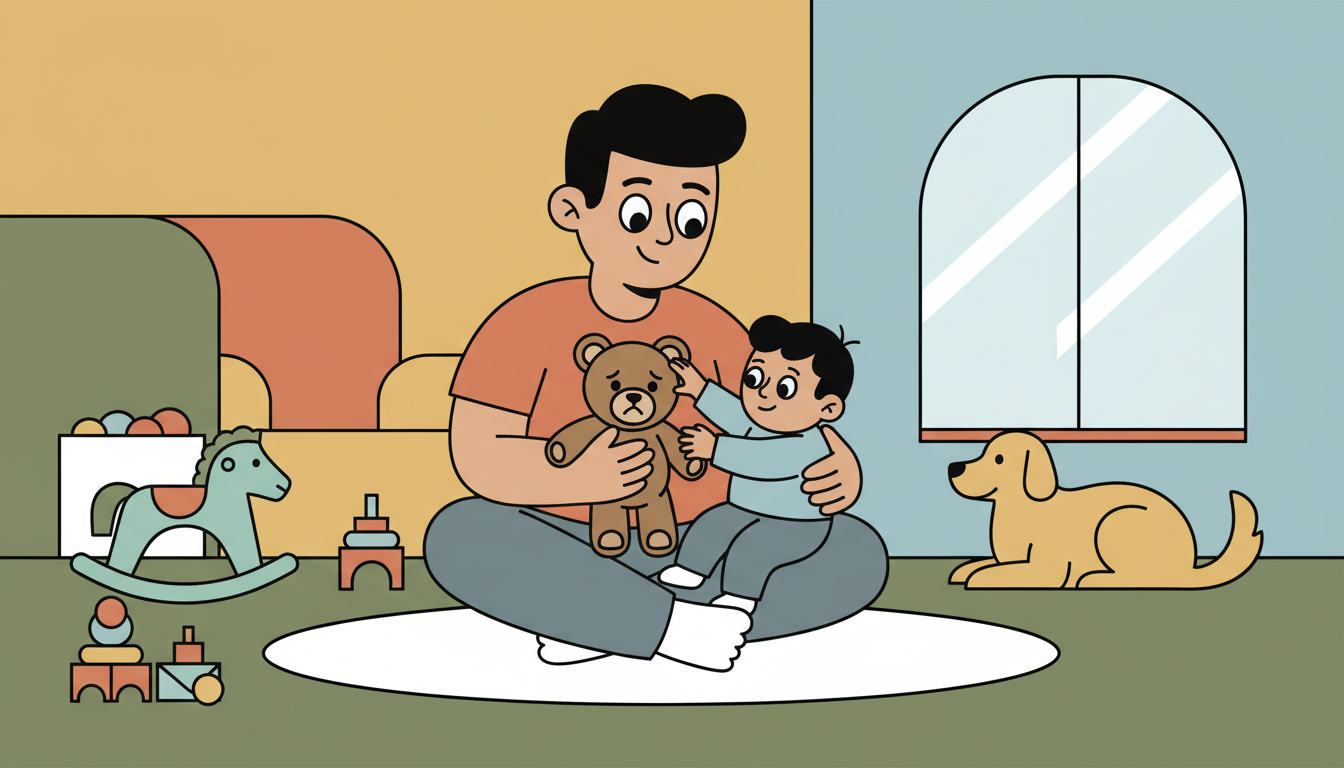
During playtime, pretend your child's stuffed animal or doll is sad or hurt. Say 'Bear is sad' with a sad face, then show your child how to pat or hug the toy gently. Encourage your child to help comfort the toy. You might say 'Can you give bear a hug?' This pretend play lets your child practice responding to others' feelings in a safe, simple way.
Part of the Imprint developmental journey — personalized to your child.
How to Do This Activity
During playtime, pretend your child's stuffed animal or doll is sad or hurt. Say 'Bear is sad' with a sad face, then show your child how to pat or hug the toy gently. Encourage your child to help comfort the toy. You might say 'Can you give bear a hug?' This pretend play lets your child practice responding to others' feelings in a safe, simple way.
Why It Works
Symbolic play allows children to practice perspective-taking and empathetic responses in a low-pressure way. Modeling empathetic behavior teaches children how to respond compassionately to others' distress (Hoffman, 2000). At this age, children learn powerfully through imitation and modeling, and pretend scenarios give them concrete practice in recognizing and responding to emotions, which are key childhood behaviors that predict stronger empathy into adulthood.
Tips for Parents
Start with just one emotion like sad or hurt. Keep the pretend scenario very simple.
Show your child what to do first. Pat the bear gently and say 'I'm helping bear feel better.'
Praise any attempt your child makes to comfort the toy. Say 'You are being so gentle with bear.'
Materials Needed
Stuffed animal or doll
Learning Methods
Language-Rich EnvironmentImitation and ModelingBeginning Symbolic Play

Loved this activity? Let us do the planning for you.
Imprint personalizes every activity to your child — their interests, their stage, the traits they're building — so playtime is more fun and every moment counts.
Science-backed. Private by design. No spam.