Stuffed animal feelings
2–3 yearsEmotional WellbeingMaterials: Stuffed animals or dolls
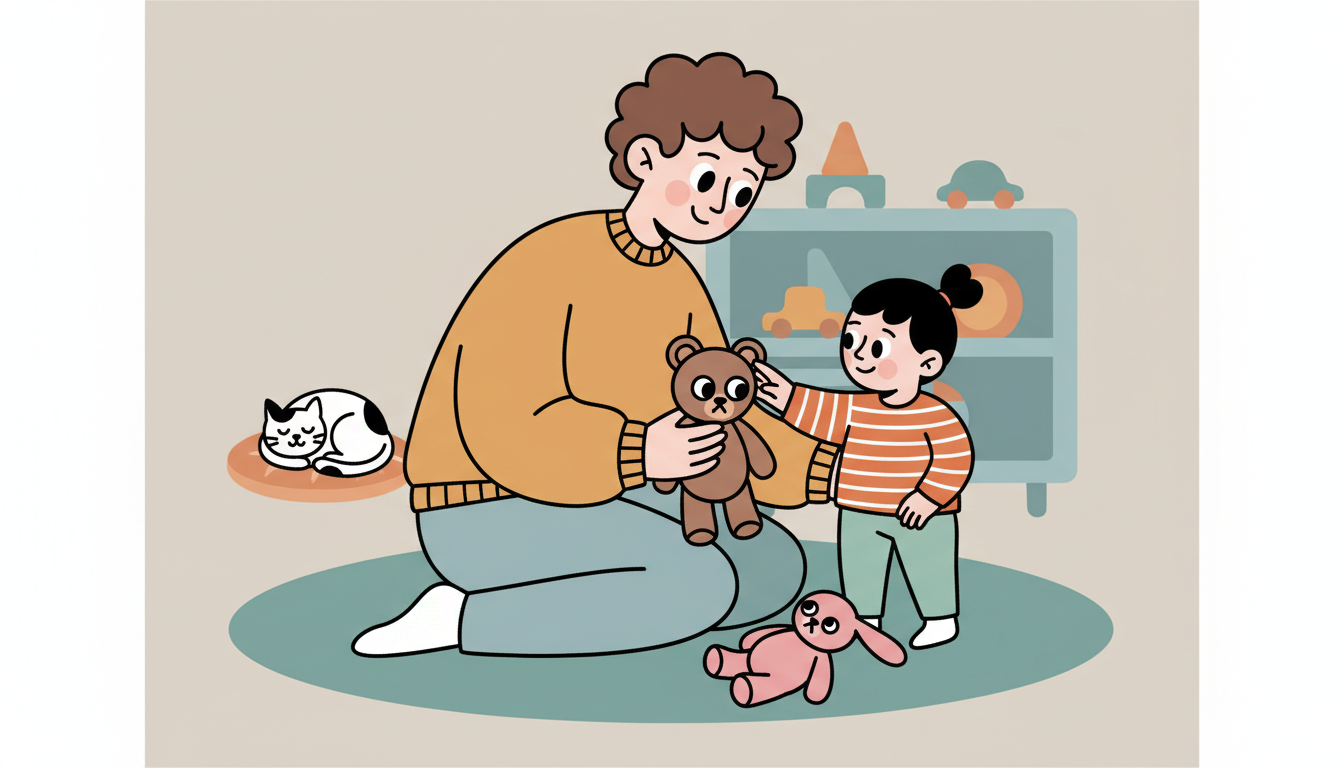
Use stuffed animals or dolls to act out simple emotional scenarios. You might say, 'Teddy fell down. How does Teddy feel?' Let your child respond, then help Teddy feel better together.
Part of the Imprint developmental journey — personalized to your child.
How to Do This Activity
Use stuffed animals or dolls to act out simple emotional scenarios. You might say, 'Teddy fell down. How does Teddy feel?' Let your child respond, then help Teddy feel better together.
This play-based approach lets your child practice empathy and problem-solving in a safe, pretend context. It's easier to talk about a toy's feelings than their own big emotions.
Why It Works
Symbolic and pretend play is critical for cognitive, social, and emotional development at this age. Research shows that early emotional intelligence development leads to better emotional recognition and expression skills in adulthood (Goleman, 1995). Empathy is one of the five core components of EQ, and children with higher emotional intelligence experience significantly better relationship satisfaction and mental health outcomes (Bar-On, 2006).
Tips for Parents
Follow your child's lead. If they want to make the stuffed animal do something different, go with it.
You can introduce simple solutions like, 'Should we give Teddy a hug to help him feel better?'
Materials Needed
Stuffed animals or dolls
Learning Methods
Symbolic and Pretend PlaySongs, Stories, and RhymesSocial Learning Through Peers

Loved this activity? Let us do the planning for you.
Imprint personalizes every activity to your child — their interests, their stage, the traits they're building — so playtime is more fun and every moment counts.
Science-backed. Private by design. No spam.