Shape matching game
2–3 yearsSuccess MindsetMaterials: Paper shapes or household items with different shapes
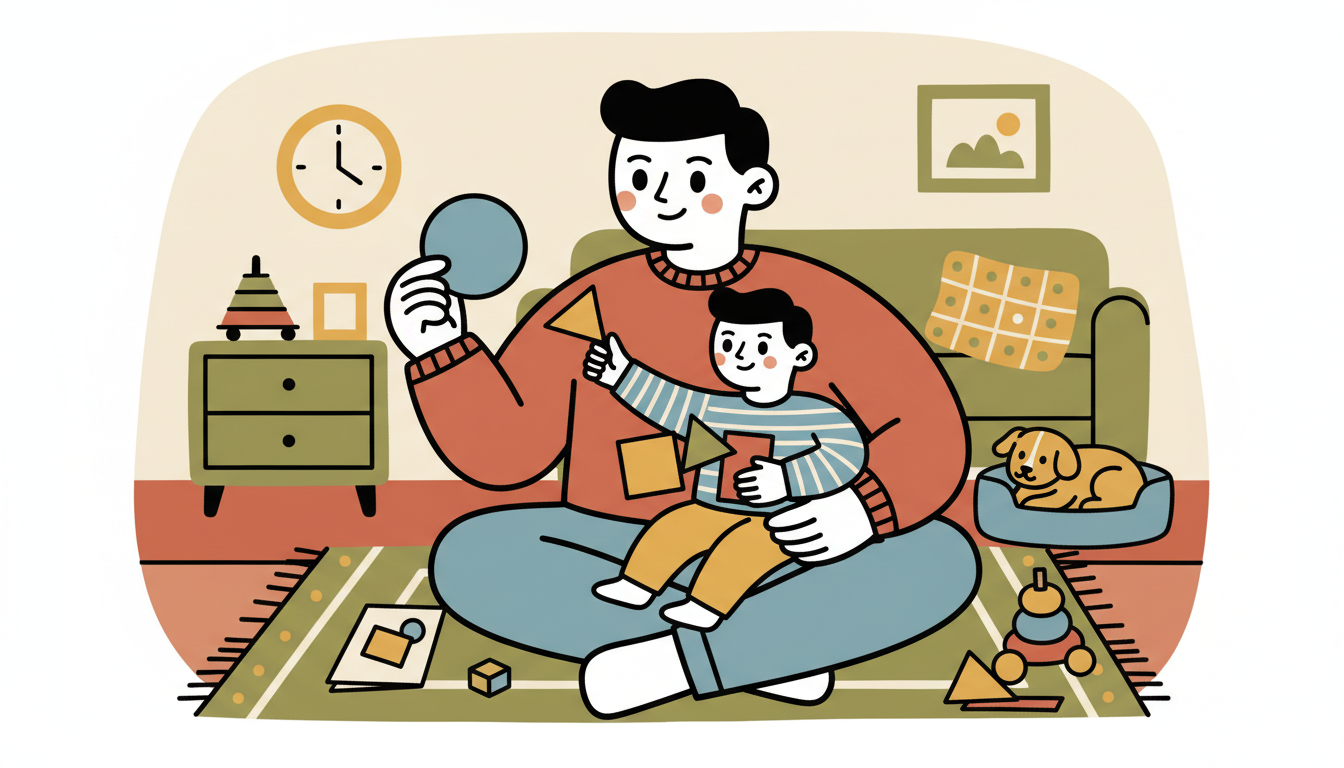
Cut out simple shapes from paper or use items from around your home that are different shapes. Show your child a circle and ask them to find other circles. Then try squares, triangles, or rectangles. Talk about what makes each shape special, like 'This one is round' or 'This one has corners.' You can make it a scavenger hunt by walking around together finding shapes in your home.
Part of the Imprint developmental journey — personalized to your child.
How to Do This Activity
Cut out simple shapes from paper or use items from around your home that are different shapes. Show your child a circle and ask them to find other circles. Then try squares, triangles, or rectangles. Talk about what makes each shape special, like 'This one is round' or 'This one has corners.' You can make it a scavenger hunt by walking around together finding shapes in your home.
Why It Works
Shape recognition and matching build visual discrimination and categorization skills that are fundamental to cognitive development. These early pattern recognition abilities support mathematical thinking and spatial reasoning. Developing strong cognitive skills in early childhood, including shape knowledge, contributes to academic readiness and long-term intellectual development (Schneider et al., 2014).
Tips for Parents
Start with circles and squares since these are easiest to distinguish. Add other shapes gradually.
Point out shapes in everyday items. Say 'Your plate is a circle' or 'The window is a square' during regular activities.
At this age, children categorize by one feature at a time. They might focus on color instead of shape sometimes. That's developmentally normal.
Materials Needed
Paper shapes or household items with different shapes
Learning Methods
Interactive Play-Based LearningSongs, Stories, and RhymesHands-On Sensory Activities

Loved this activity? Let us do the planning for you.
Imprint personalizes every activity to your child — their interests, their stage, the traits they're building — so playtime is more fun and every moment counts.
Science-backed. Private by design. No spam.