Same and different exploration
2–3 yearsSuccess MindsetMaterials: Pairs of similar household objects or toys
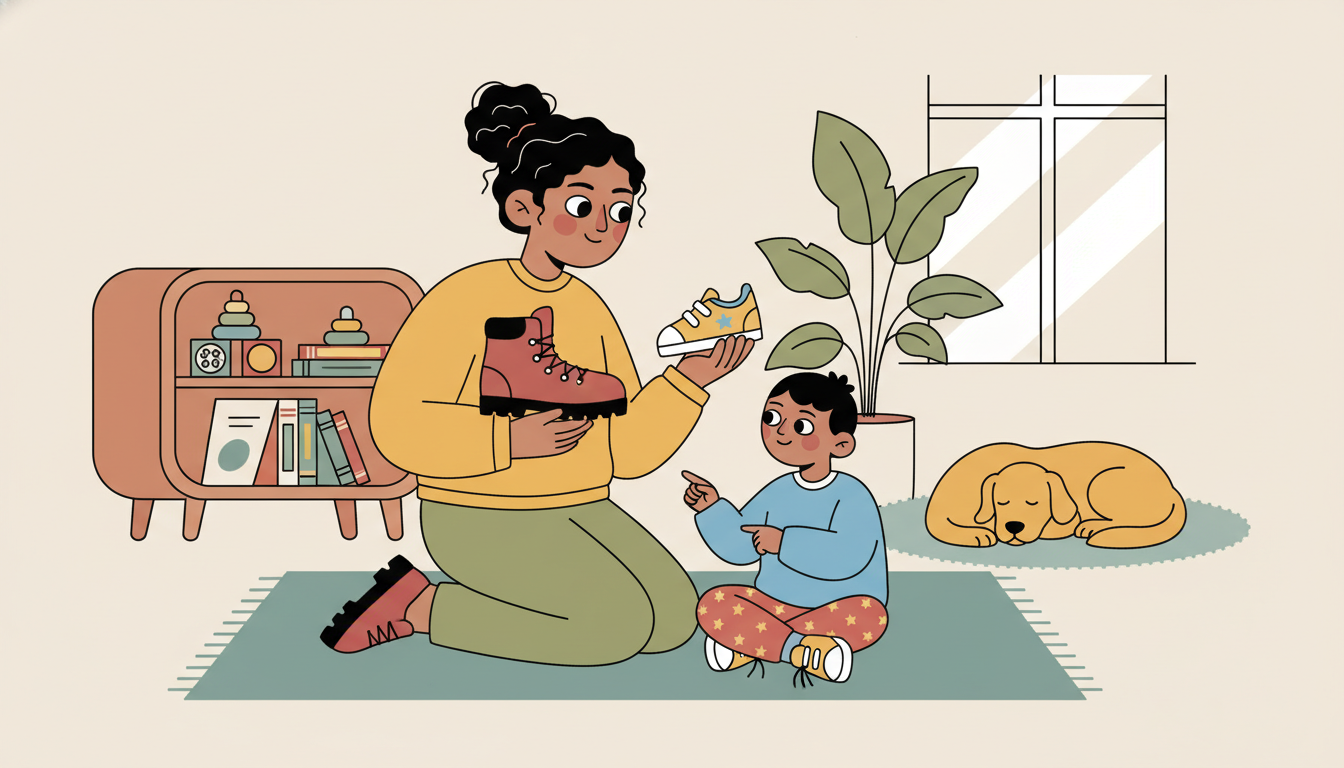
Choose two similar objects like two different shoes, two different cups, or two different toys. Explore them together and talk about how they're the same and how they're different. You might notice that both cups hold water but one is blue and one is red. Or both shoes go on feet but one is bigger. Let your child point out what they notice. As they get comfortable, you can compare three items or let them choose what to compare.
Part of the Imprint developmental journey — personalized to your child.
How to Do This Activity
Choose two similar objects like two different shoes, two different cups, or two different toys. Explore them together and talk about how they're the same and how they're different. You might notice that both cups hold water but one is blue and one is red. Or both shoes go on feet but one is bigger. Let your child point out what they notice. As they get comfortable, you can compare three items or let them choose what to compare.
Why It Works
Comparing and contrasting objects builds critical thinking and categorization skills that are emerging at this age. When children actively explore questions like "How are these the same?", they engage in deeper cognitive processing (Gruber et al., 2014). This type of analytical thinking supports later math and reading skills. Research shows that children who are curious and engaged with learning materials achieve better academic outcomes (Shah et al., 2018). By encouraging your child to notice details and make connections, you're building the observational skills and intrinsic curiosity that support lifelong learning.
Tips for Parents
Start with objects that have obvious differences like size or color. This makes the game easier and more successful.
Celebrate whatever your child notices, even if it's not what you expected. Their observations are building important thinking skills.
Use this activity spontaneously throughout the day. You can compare foods at meals, clothes at dressing time, or toys during play.
Materials Needed
Pairs of similar household objects or toys
Learning Methods
Symbolic and Pretend PlayHands-On Sensory ActivitiesInteractive Play-Based Learning

Loved this activity? Let us do the planning for you.
Imprint personalizes every activity to your child — their interests, their stage, the traits they're building — so playtime is more fun and every moment counts.
Science-backed. Private by design. No spam.