Photo emotion talk
1–2 yearsFamily ConnectionMaterials: Family photos (printed or on phone)
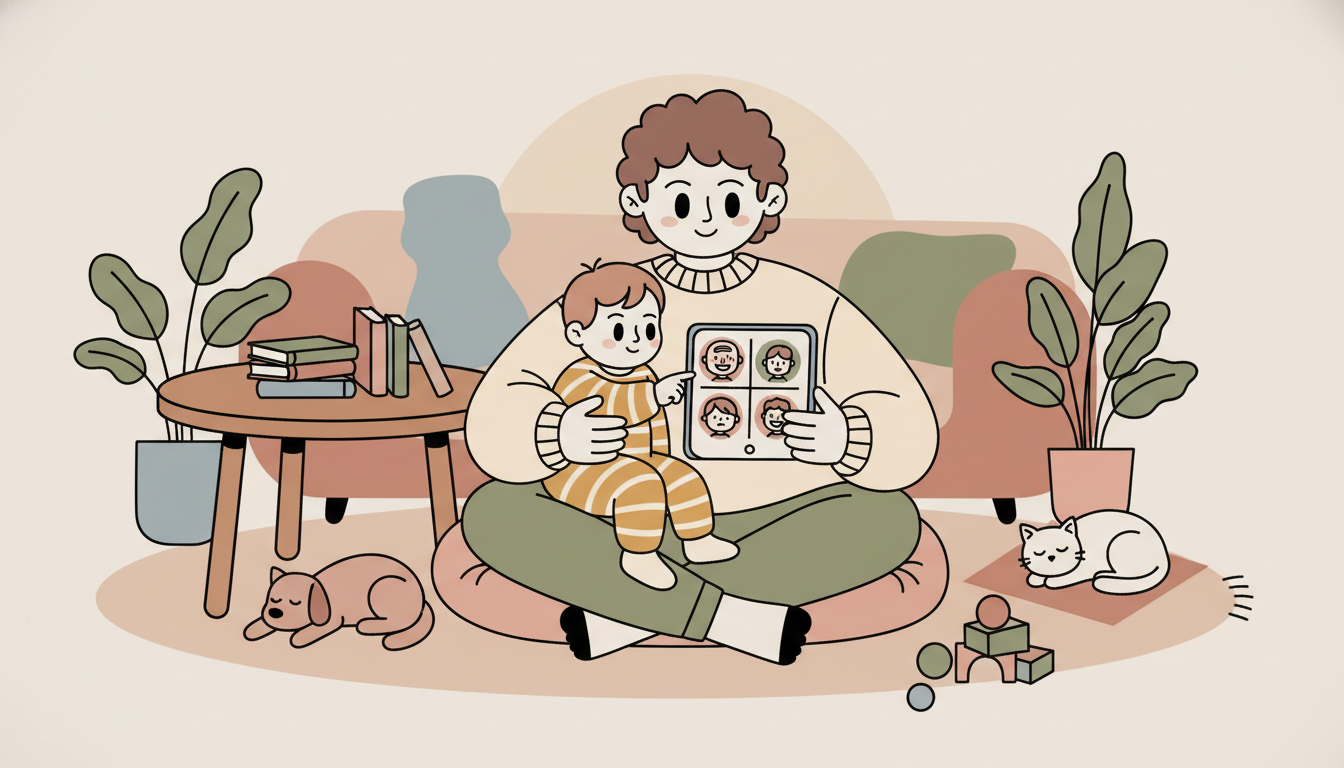
Look at family photos together and talk about how people feel in each picture. Point to smiling faces and say 'Grandma is happy.' Point to someone crying and say 'You were sad.' Keep it simple and clear. Let your child point at faces too. This activity helps your child learn that everyone has feelings and those feelings show on their faces.
Part of the Imprint developmental journey — personalized to your child.
How to Do This Activity
Look at family photos together and talk about how people feel in each picture. Point to smiling faces and say 'Grandma is happy.' Point to someone crying and say 'You were sad.' Keep it simple and clear. Let your child point at faces too. This activity helps your child learn that everyone has feelings and those feelings show on their faces.
Why It Works
Recognizing and responding sensitively to others' emotions is a key childhood behavior that predicts stronger adult empathy and relationship quality (Eisenberg et al., 2015). Using familiar faces helps children practice emotion recognition in a personally meaningful context. When parents consistently label and discuss emotions, they create the language-rich environment that supports both emotional vocabulary and emotional understanding, two building blocks of empathy and emotional intelligence.
Tips for Parents
Use photos of people your child knows. Familiar faces are easier to read.
Point to specific facial features. Say 'See the smile? That means happy.'
Talk about your child's own feelings in photos. Say 'You felt happy at the park.'
Materials Needed
Family photos (printed or on phone)
Learning Methods
Language-Rich EnvironmentImitation and ModelingBeginning Symbolic Play

Loved this activity? Let us do the planning for you.
Imprint personalizes every activity to your child — their interests, their stage, the traits they're building — so playtime is more fun and every moment counts.
Science-backed. Private by design. No spam.