Imitation and copying games
6–12 monthsSuccess MindsetNo materials needed
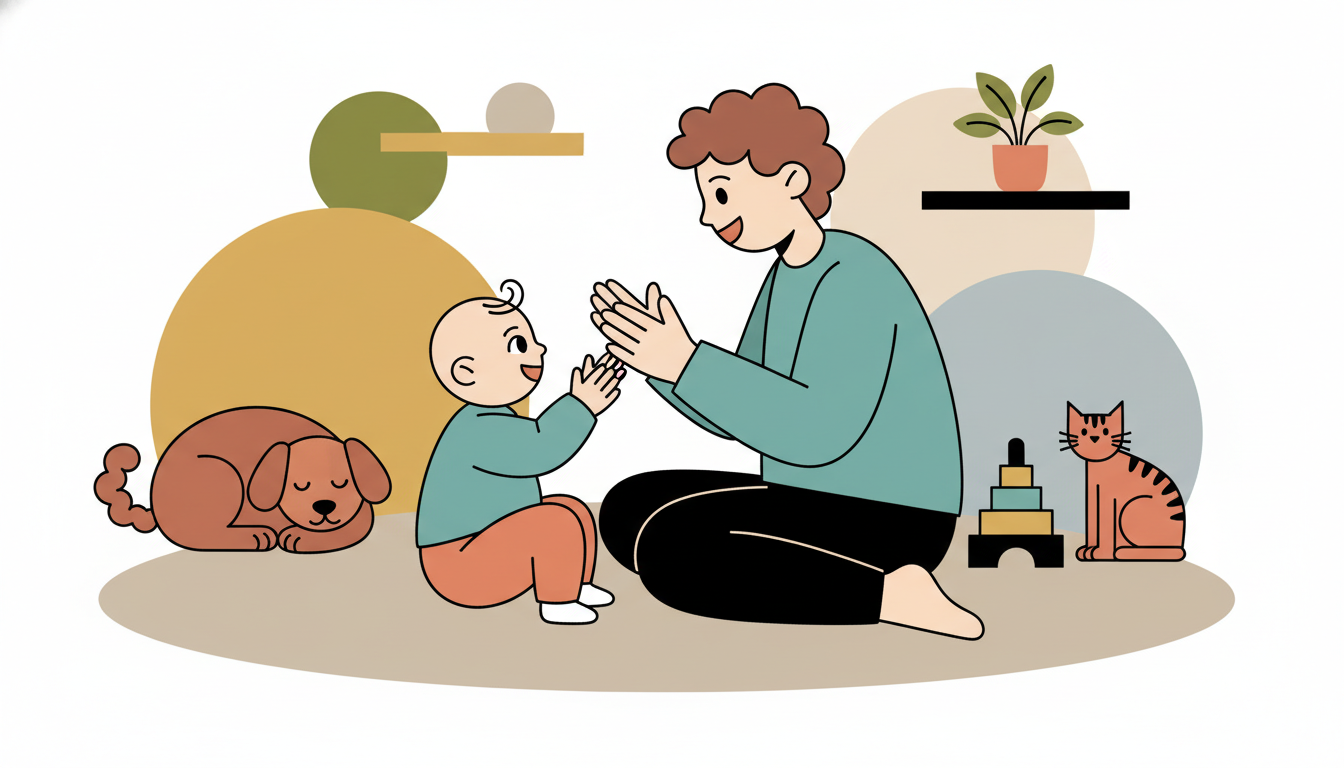
Sit facing your child and perform simple actions like clapping hands, tapping a table, or waving. Pause and see if they try to copy you. When they imitate an action, do it again and smile to encourage them. You can also imitate their actions to create a back-and-forth game. This builds their understanding that they can influence others and learn through observation.
Part of the Imprint developmental journey — personalized to your child.
How to Do This Activity
Sit facing your child and perform simple actions like clapping hands, tapping a table, or waving. Pause and see if they try to copy you. When they imitate an action, do it again and smile to encourage them. You can also imitate their actions to create a back-and-forth game. This builds their understanding that they can influence others and learn through observation.
Why It Works
Imitation is a powerful learning mechanism that supports cognitive development. The responsive serve-and-return interactions during imitation games build neural connections rapidly during the first year when the brain is most plastic. These early interactions support the development of attention control and working memory, which predict later literacy, numeracy, and academic achievement (Welsh et al., 2010). Learning through observation and imitation is foundational to developing the cognitive abilities measured by IQ tests.
Tips for Parents
Keep actions very simple at first. Complex movements are too hard for this age to copy.
When your child imitates you, respond with warmth and encouragement. This positive interaction strengthens their learning.
Materials Needed
None
Learning Methods
Sensory ExplorationResponsive InteractionMovement-Based Learning

Loved this activity? Let us do the planning for you.
Imprint personalizes every activity to your child — their interests, their stage, the traits they're building — so playtime is more fun and every moment counts.
Science-backed. Private by design. No spam.