Feelings picture walk
2–3 yearsFamily ConnectionMaterials: Family photos or picture books
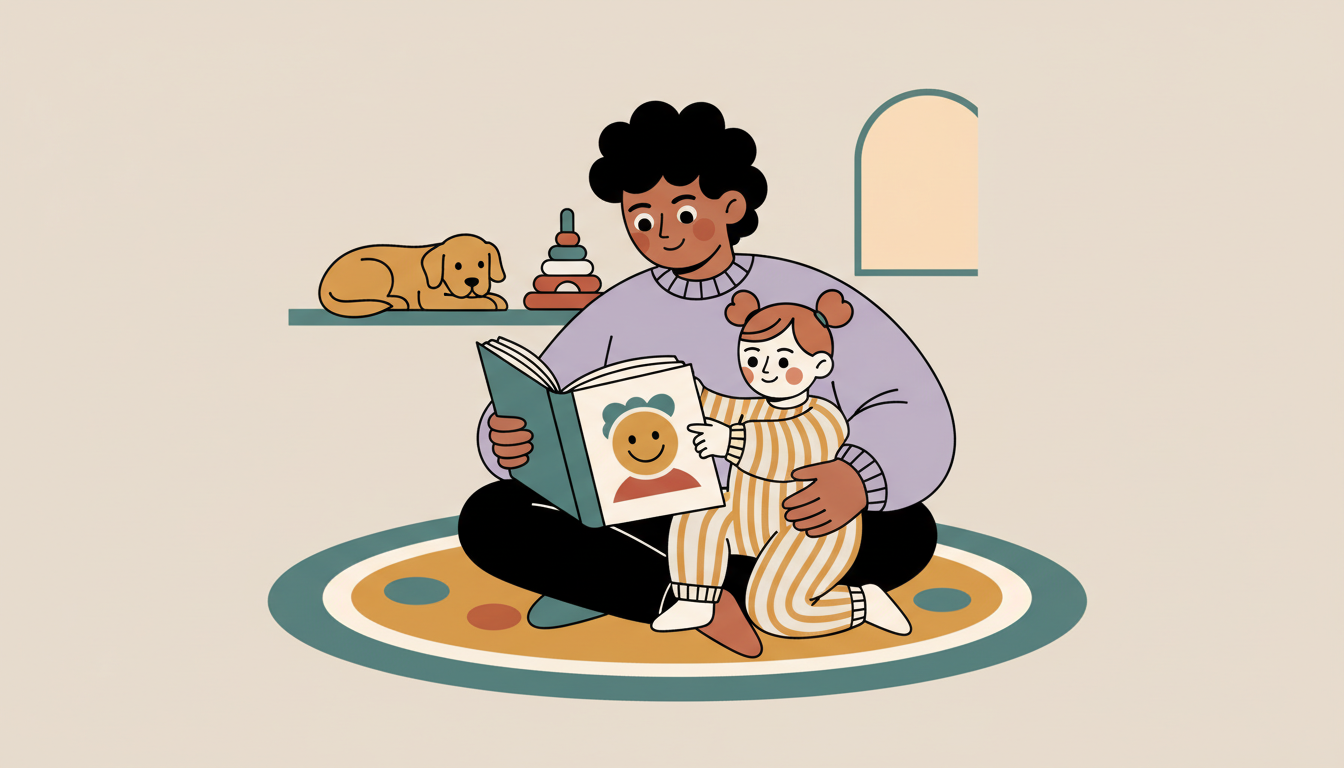
Look at family photos or pictures in books together. Point to faces and ask 'Is grandma happy or sad here?' Talk about what you see in their expressions. You might say 'Look at daddy's big smile. He was so happy that day.' This helps your child practice reading emotional cues in faces.
Part of the Imprint developmental journey — personalized to your child.
How to Do This Activity
Look at family photos or pictures in books together. Point to faces and ask 'Is grandma happy or sad here?' Talk about what you see in their expressions. You might say 'Look at daddy's big smile. He was so happy that day.' This helps your child practice reading emotional cues in faces.
Why It Works
Learning to recognize emotions in others is a foundational empathy skill. This activity helps children move beyond egocentric thinking to understand that others have distinct feelings. The ability to distinguish self from others and recognize others' feelings emerges between 24 and 36 months, making this an ideal activity for this developmental window (Hoffman, M. L., 2000). Recognizing and responding sensitively to emotions predicts positive relationships throughout life (Eisenberg, N., Spinrad, T. L., & Knafo-Noam, A., 2015).
Tips for Parents
Use photos of people your child knows. Familiar faces make it easier to connect emotions to real people.
Start with clear, strong emotions. Save subtle expressions for when your child is older.
Materials Needed
Family photos or picture books
Learning Methods
Symbolic and Pretend PlaySongs, Stories, and RhymesSocial Learning Through Peers

Loved this activity? Let us do the planning for you.
Imprint personalizes every activity to your child — their interests, their stage, the traits they're building — so playtime is more fun and every moment counts.
Science-backed. Private by design. No spam.