Feelings in our story
2–3 yearsFamily ConnectionMaterials: Picture books with clear facial expressions
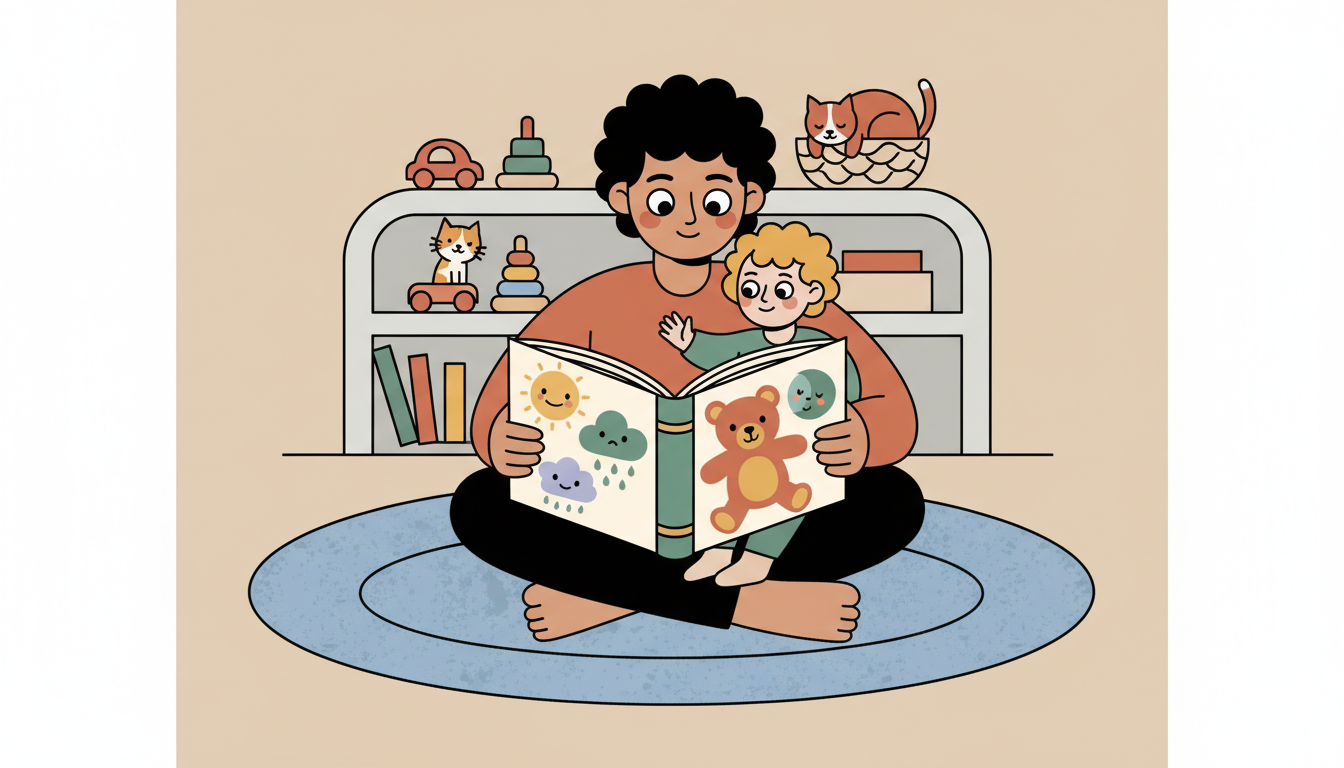
During story time, pause to point out characters' emotions. Ask simple questions like 'Is teddy happy or sad?' Help your child notice facial expressions in the pictures. Name the emotions you see together. This turns reading time into an empathy learning moment.
Part of the Imprint developmental journey — personalized to your child.
How to Do This Activity
During story time, pause to point out characters' emotions. Ask simple questions like 'Is teddy happy or sad?' Help your child notice facial expressions in the pictures. Name the emotions you see together. This turns reading time into an empathy learning moment.
Why It Works
Reading books about feelings and discussing characters' emotions helps children begin distinguishing self from others and recognizing that others have feelings. This activity leverages the critical developmental window when basic empathetic awareness becomes possible for the first time (Hoffman, M. L., 2000). Songs, stories, and rhymes enhance learning during this age, making books an ideal tool for empathy development.
Tips for Parents
Start with basic emotions like happy, sad, and mad. Use the same emotion words consistently.
Point to your own face to show the emotion, then point to the character. Your child learns by watching you model empathy.
Materials Needed
Picture books with clear facial expressions
Learning Methods
Symbolic and Pretend PlaySongs, Stories, and RhymesSocial Learning Through Peers

Loved this activity? Let us do the planning for you.
Imprint personalizes every activity to your child — their interests, their stage, the traits they're building — so playtime is more fun and every moment counts.
Science-backed. Private by design. No spam.