Feelings and faces
1–2 yearsFamily ConnectionNo materials needed
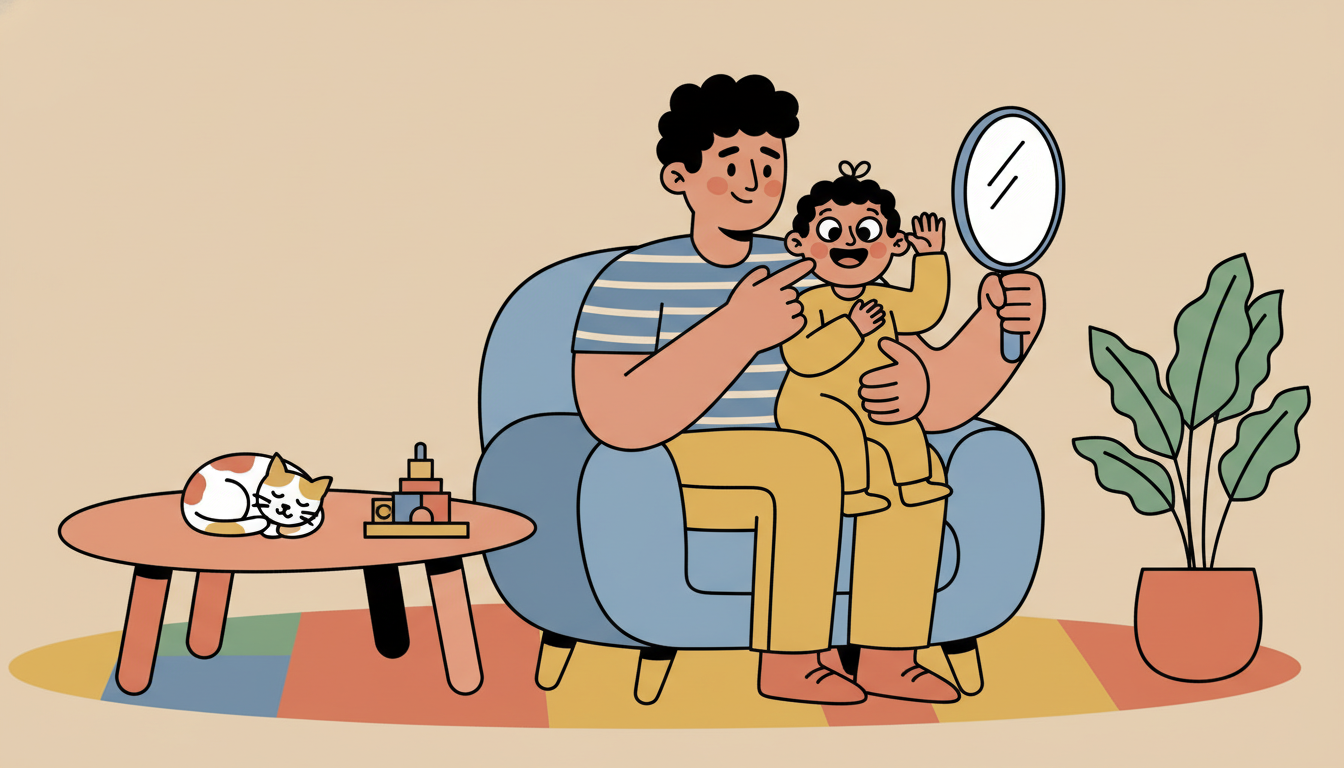
Throughout your day, name your child's feelings when you notice them. Say things like you look happy or I see you feel frustrated. Use a calm, warm tone. You can also make faces together in a mirror and name the emotions you both show.
Part of the Imprint developmental journey — personalized to your child.
How to Do This Activity
Throughout your day, name your child's feelings when you notice them. Say things like you look happy or I see you feel frustrated. Use a calm, warm tone. You can also make faces together in a mirror and name the emotions you both show.
Why It Works
Naming and validating feelings establishes a safe space for open communication, which research shows is essential for building strong parent-child relationships (Hartos & Power, 2000). Quality communication that includes empathy and appropriate responses enhances relationship quality and supports your child's psychological development (Zhang & Li, 2024). Starting this practice during the language explosion period helps your child develop both emotional vocabulary and the habit of expressing feelings openly.
Tips for Parents
Keep emotion words simple. Happy, sad, mad, and scared work well for this age.
Name your own feelings too. This helps your child learn that everyone has emotions.
Stay calm and matter of fact. Your child is learning that feelings can be talked about safely.
Materials Needed
None
Learning Methods
Language-Rich EnvironmentImitation and Modeling

Loved this activity? Let us do the planning for you.
Imprint personalizes every activity to your child — their interests, their stage, the traits they're building — so playtime is more fun and every moment counts.
Science-backed. Private by design. No spam.