Face feelings match
2–3 yearsFamily ConnectionMaterials: None, or a mirror if available
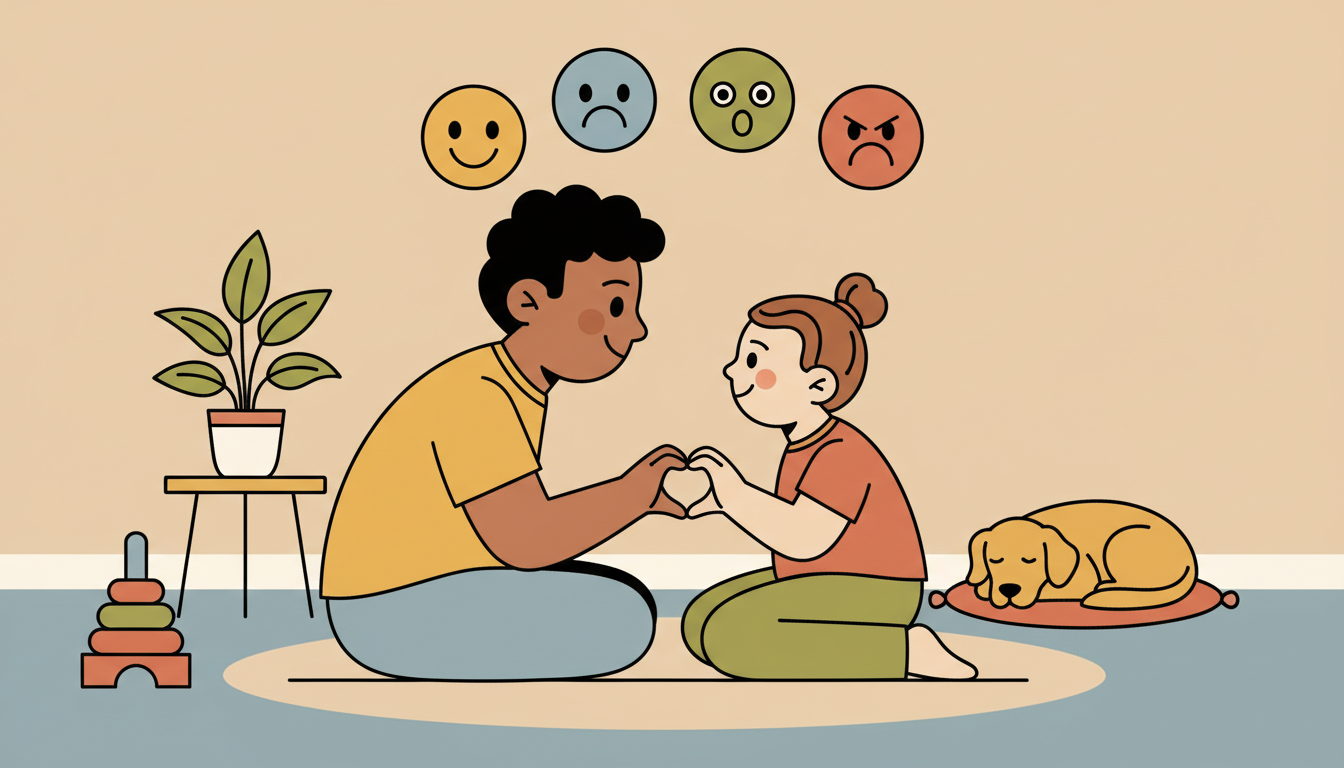
Make simple faces showing different emotions. Say 'I am making a happy face. Can you make one too?' Try sad, surprised, and mad faces. When your child copies you, name what you see: 'You made a sad face. Your mouth goes down when you are sad.' Take turns making faces.
Part of the Imprint developmental journey — personalized to your child.
How to Do This Activity
Make simple faces showing different emotions. Say 'I am making a happy face. Can you make one too?' Try sad, surprised, and mad faces. When your child copies you, name what you see: 'You made a sad face. Your mouth goes down when you are sad.' Take turns making faces.
Why It Works
Recognizing emotions in self and others is a key developmental indicator of emerging empathy. This activity helps children practice the foundational skill of distinguishing different emotional states. Parental empathy and modeling create the positive family climate that fosters children's empathy abilities and social behavior (Sánchez-Pérez, N., Fuentes, L. J., Jolliffe, D., & González-Salinas, C., 2018). Imitation and social learning are powerful at this age.
Tips for Parents
Start with happy and sad. These are easiest for young children to recognize and copy.
Use a mirror if you have one handy. Seeing their own expressions helps children understand emotions better.
Materials Needed
None, or a mirror if available
Learning Methods
Symbolic and Pretend PlaySongs, Stories, and RhymesSocial Learning Through Peers

Loved this activity? Let us do the planning for you.
Imprint personalizes every activity to your child — their interests, their stage, the traits they're building — so playtime is more fun and every moment counts.
Science-backed. Private by design. No spam.