Patient toy retrieval
6–12 monthsFamily ConnectionMaterials: Safe toys your child can drop
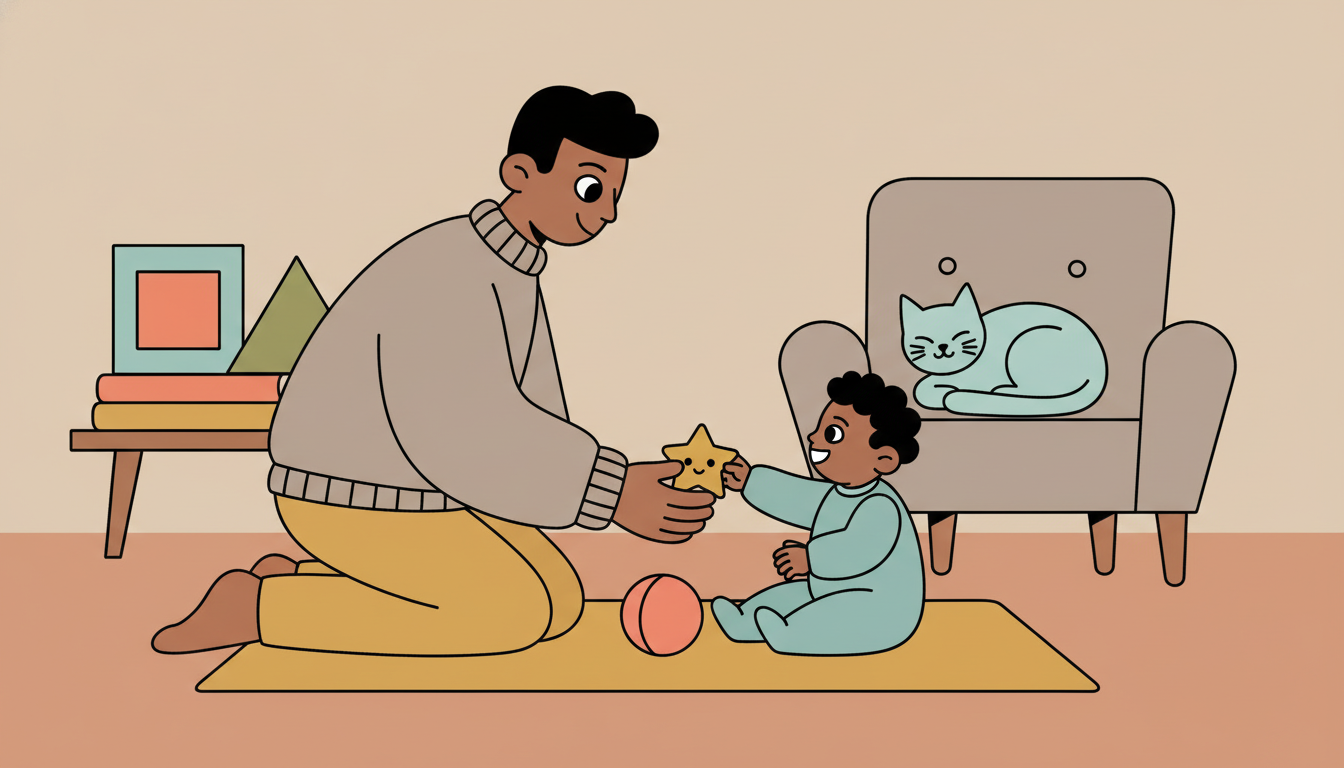
When your child drops or throws a toy repeatedly, stay calm and patient as you hand it back. Use a neutral or playful tone rather than frustration. This teaches your child that even annoying situations can be handled peacefully. They learn cause and effect while you model emotional regulation.
Part of the Imprint developmental journey — personalized to your child.
How to Do This Activity
When your child drops or throws a toy repeatedly, stay calm and patient as you hand it back. Use a neutral or playful tone rather than frustration. This teaches your child that even annoying situations can be handled peacefully. They learn cause and effect while you model emotional regulation.
Why It Works
Staying regulated during your child's repetitive behaviors builds the foundation for conflict resolution. Collaborative problem-solving approaches in families predict better parent-child relationships during adolescence and young adulthood (Robin & Foster, 1989). Your patient responses now teach your child that interactions can stay positive even during frustrating moments, building skills that last a lifetime.
Tips for Parents
Remind yourself that dropping toys is learning, not misbehavior. This helps you stay patient.
If frustration builds, you can calmly end the game by moving the toy out of reach.
Use simple words like "Down it goes" to stay playful rather than annoyed.
Materials Needed
Safe toys your child can drop
Learning Methods
Responsive Interaction

Loved this activity? Let us do the planning for you.
Imprint personalizes every activity to your child — their interests, their stage, the traits they're building — so playtime is more fun and every moment counts.
Science-backed. Private by design. No spam.