Name their feelings
6–12 monthsFamily ConnectionNo materials needed
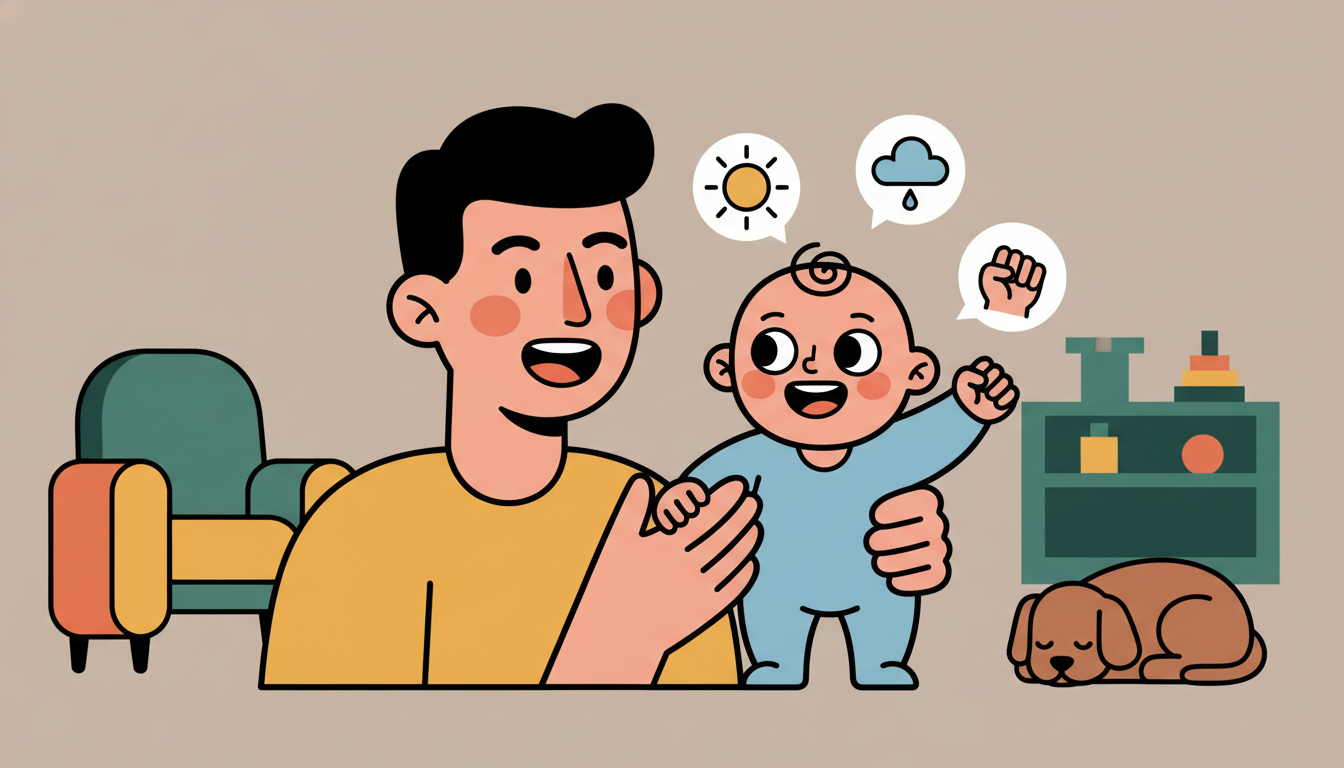
When your child shows emotion, put words to what you see. If they're laughing during play, you might say, "You're happy." If they seem frustrated reaching for something, you might say, "That's hard to reach. You feel frustrated." This practice shows respect for their emotional experience and builds trust that you understand them.
Part of the Imprint developmental journey — personalized to your child.
How to Do This Activity
When your child shows emotion, put words to what you see. If they're laughing during play, you might say, "You're happy." If they seem frustrated reaching for something, you might say, "That's hard to reach. You feel frustrated." This practice shows respect for their emotional experience and builds trust that you understand them.
Why It Works
Acknowledging your child's emotions demonstrates that you respect their internal experience. This consistent emotional responsiveness builds trust in the relationship. Children demonstrating reliability and respect toward parents' boundaries show 40% better emotional regulation and trust-building capabilities throughout development (Kochanska & Aksan, 2006).
Tips for Parents
Keep your tone calm and matter-of-fact. You're not trying to fix their feelings, just showing you notice and respect them.
It's okay if you're not always right about which emotion they're feeling. The important part is that you're paying attention and trying to understand.
Materials Needed
None
Learning Methods
Responsive InteractionRepetition and Routine

Loved this activity? Let us do the planning for you.
Imprint personalizes every activity to your child — their interests, their stage, the traits they're building — so playtime is more fun and every moment counts.
Science-backed. Private by design. No spam.