Mirror conversations
6–12 monthsFamily ConnectionMaterials: Mirror
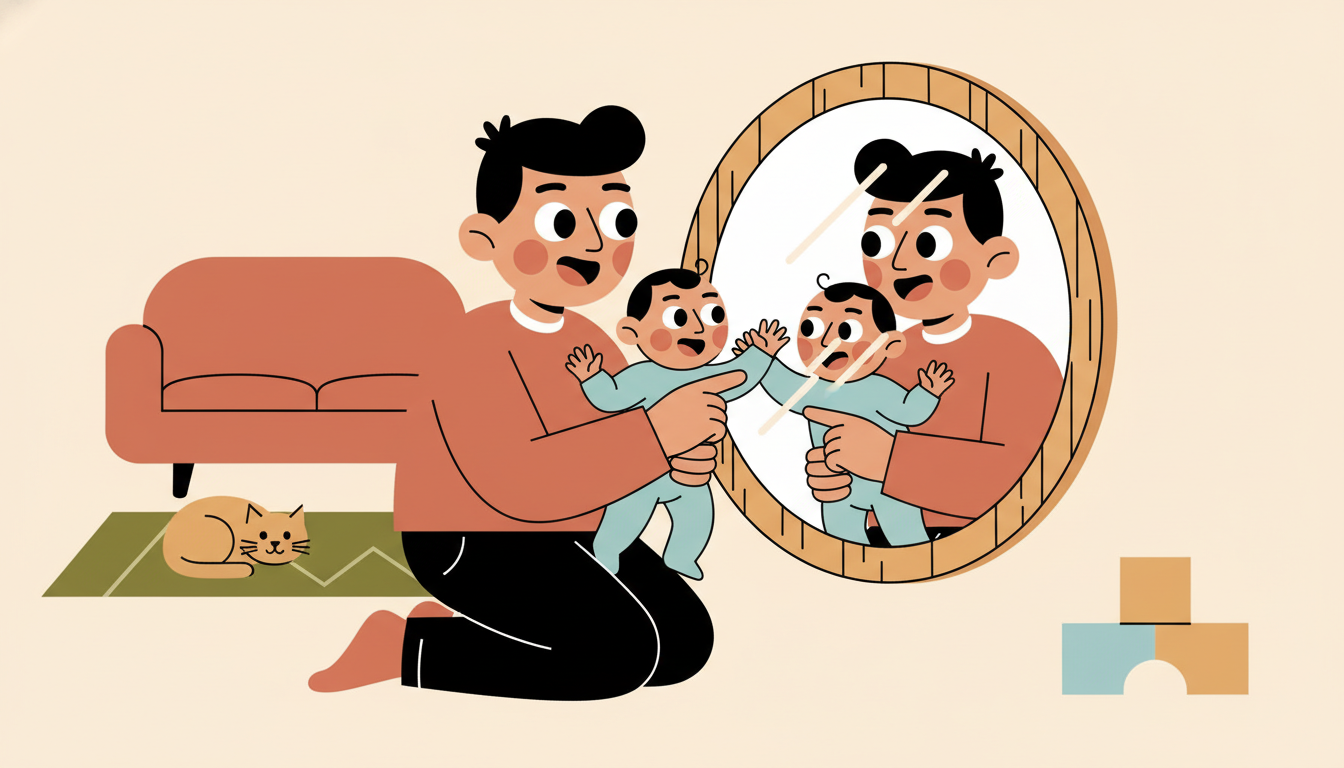
When you're near a mirror with your child, point to their reflection and yours while naming who you see. Make different faces and sounds, then pause to see if your child imitates or responds. When they make a sound or expression, mirror it back to them. This playful routine helps your child understand they can initiate and respond in communication.
Part of the Imprint developmental journey — personalized to your child.
How to Do This Activity
When you're near a mirror with your child, point to their reflection and yours while naming who you see. Make different faces and sounds, then pause to see if your child imitates or responds. When they make a sound or expression, mirror it back to them. This playful routine helps your child understand they can initiate and respond in communication.
Why It Works
Mirroring is one of the four key factors in parent-child communication quality that enhances relationship development and psychological growth (Zhang & Li, 2024). When you reflect your child's expressions and sounds back to them, you validate their communication and help them recognize their own agency in interactions. This reciprocal exchange teaches the fundamental pattern of conversation and builds confidence in their ability to communicate effectively.
Tips for Parents
Start with simple expressions like smiling or opening your mouth wide. Wait to see if your child copies you.
Point to your child in the mirror and say your child's name. Then point to yourself and say your name.
When your child makes a face or sound, copy it exactly. This shows you're paying attention to their communication.
Materials Needed
Mirror
Learning Methods
Responsive InteractionRepetition and Routine

Loved this activity? Let us do the planning for you.
Imprint personalizes every activity to your child — their interests, their stage, the traits they're building — so playtime is more fun and every moment counts.
Science-backed. Private by design. No spam.