Emotion naming practice
6–12 monthsFamily ConnectionNo materials needed
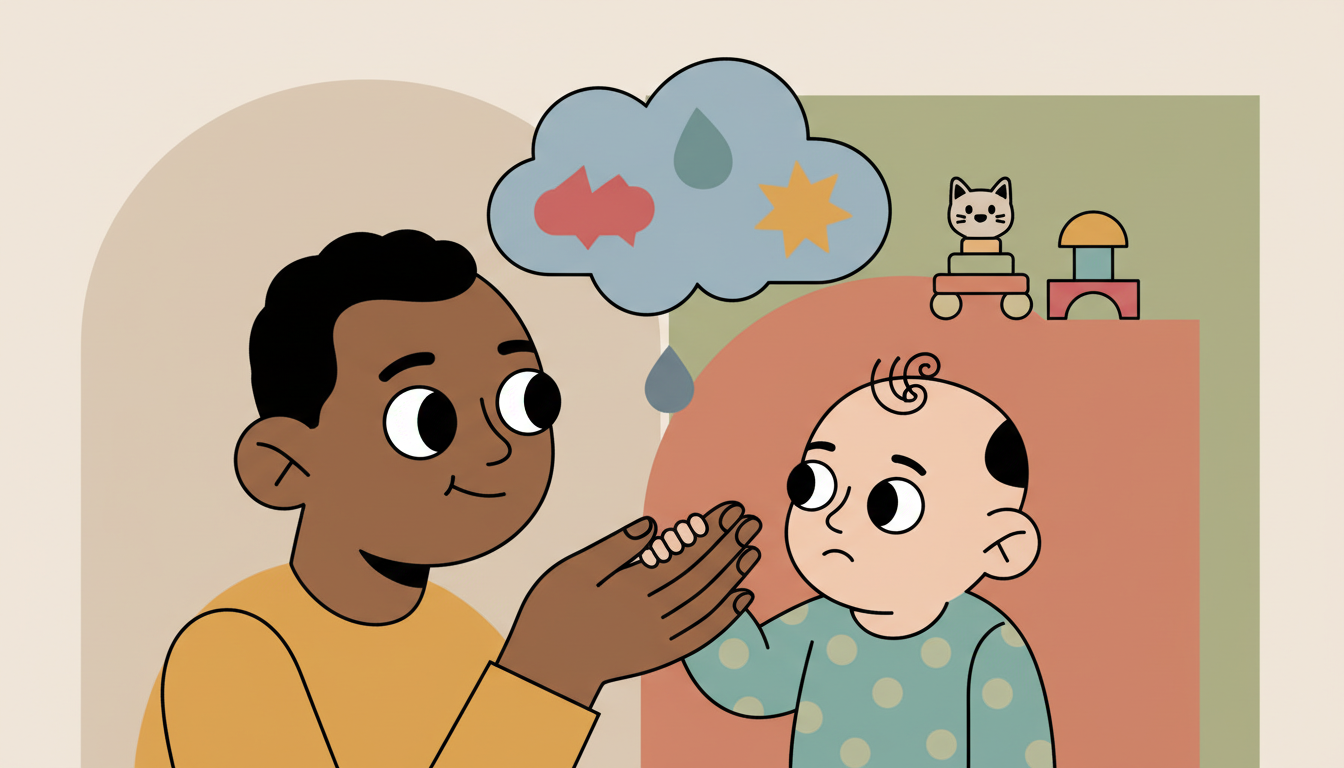
When your child shows distress, name what you see in simple words. Say "You feel upset" or "That was frustrating" in a calm voice. This validates their experience and teaches that emotions are normal and manageable. Your calm naming helps them begin to understand their own feelings.
Part of the Imprint developmental journey — personalized to your child.
How to Do This Activity
When your child shows distress, name what you see in simple words. Say "You feel upset" or "That was frustrating" in a calm voice. This validates their experience and teaches that emotions are normal and manageable. Your calm naming helps them begin to understand their own feelings.
Why It Works
Naming emotions calmly teaches that feelings are normal and can be discussed peacefully. This builds the foundation for verbal conflict resolution. Early training in conflict resolution and problem-solving skills leads to significantly better peer relationships and reduced aggression, with children showing 25% fewer behavioral problems (Webster-Stratton & Reid, 2004). Your calm emotion coaching now prepares your child to use words for conflict resolution as they grow.
Tips for Parents
Use simple emotion words like upset, sad, mad, or frustrated consistently.
Keep your voice calm and accepting when naming emotions. Avoid sounding worried or stressed.
Pair emotion naming with soothing so your child learns feelings can be managed.
Materials Needed
None
Learning Methods
Responsive Interaction

Loved this activity? Let us do the planning for you.
Imprint personalizes every activity to your child — their interests, their stage, the traits they're building — so playtime is more fun and every moment counts.
Science-backed. Private by design. No spam.